
🚨 2 Billion Consumers, Minimal Tariffs: How the EU–India FTA Will Shake Up CPG in the years to come
This Trade Deal Will Reshape CPG: The EU–India FTA Explained, and What CEOs Must Do Next

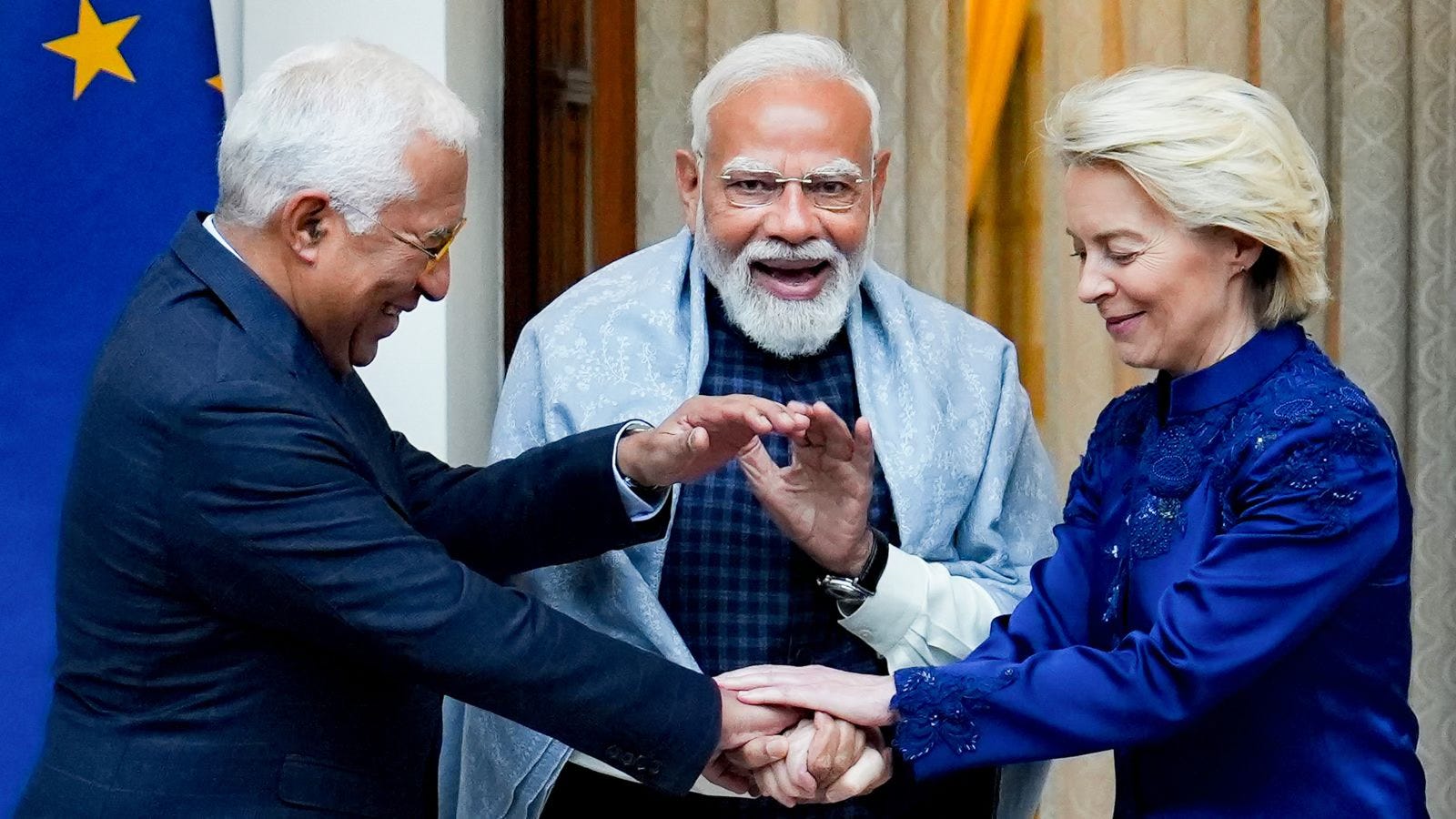
On 27 January 2026, India and the European Union announced the conclusion of negotiations on a long‑anticipated Free Trade Agreement described by leaders on both sides as the “mother of all deals.” This isn’t a symbolic statement: it marks the culmination of nearly 20 years of talks and sets the stage for a deep economic restructuring with profound implications for Consumer Packaged Goods (CPG).
But here’s the important nuance that most coverage misses: the deal doesn’t go into force immediately. After negotiations have concluded, the text now must undergo legal vetting (“legal scrubbing”), ratification by the European Parliament, approval by the Indian Union Cabinet, and final signature. Once that is complete a process expected to take several months, the agreement is likely to begin implementation in the calendar year 2026, and in some scenarios early 2027 if ratification timelines stretch.
This makes it one of the most consequential trade breakthroughs of the decade and especially significant for CPG brands on both sides of the deal.
What the EU–India FTA Really Does
At its core, this agreement will reduce or eliminate tariffs on the vast majority of goods traded between the EU and India, cutting across industrial and consumer categories.
Here’s the essence:
India will eliminate tariffs on roughly 93–97% of goods imported from the EU over a defined phase‑in period.
The EU will reciprocate on about 97–99% of Indian exports by value.
Categories such as machinery, chemicals, wines, spirits, processed foods, packaged foods, and more see steep tariff cuts or eventual elimination.
Sensitive segments such as certain agricultural staples (e.g., dairy, rice) are either excluded or subject to protective quotas.
For the CPG world, this means two things happen simultaneously:
Imported European products become more competitive in India.
Indian CPG brands gain improved access into the EU market if they’re operationally ready.
Why CPG Companies in India Must Take This Seriously
Trade policy isn’t a spreadsheet exercise it reshapes competition, supply chains, and consumer expectations.
1. Imported CPG becomes more price‑competitive
Tariffs on many European consumer goods from olive oil to beverages and premium snacks will fall sharply. This can make imported products accessible to a broader base of Indian consumers, not just affluent niches.
2. Consumer expectations will rise faster
Price isn’t the only lever: European brands bring packaging, quality consistency, and perception advantages that set new category benchmarks.
3. Domestic brands must compete on capability
Cheap tariffs only matter if supply chains, quality control, and distribution match or exceed consumer expectations. Brands that haven’t strengthened backend operations risk losing shelf space.
4. Inputs and manufacturing tech get cheaper too
Lower duties on equipment, packaging machinery, and processing inputs create an opportunity for Indian manufacturers to reduce cost per unit and improve quality.
5. Export readiness is now a tangible opportunity
Access to 27 EU markets with minimal tariffs is big, but compliance with EU standards (food safety, labeling, traceability) is non‑negotiable.
What the FTA Means for European CPG Founders
It’s not just Indian brands that should care. European founders and operators now have a framework for strategic growth in one of the world’s fastest‑growing consumer markets.
1. Faster and larger market entry
Many European consumer goods have been niche in India due to high duties. Reduced tariffs mean these products can compete at mainstream price points.
2. India as a scaling destination
India’s youthful population and rapid retail expansion make it one of the most attractive markets globally. This deal accelerates the timeline for scaling especially for premium, specialty, and lifestyle CPG segments.
3. Partnership and co‑creation opportunities
Rather than simply exporting finished products, European brands can explore co‑manufacturing, co‑branding, and joint ventures in India to deepen integration.
4. Leverage services liberalisation
The FTA includes services chapters, meaning digital operations, logistics, marketing, and fintech support can move more fluidly.
5. Compliance leadership becomes an export moat
European firms are already disciplined in navigating strict quality, labeling, and sustainability standards. That operational maturity becomes a competitive advantage when selling into India.
10 Things Every CPG Leader Should Care About. Now
Whether you’re based in India or Europe, here’s a practical checklist to inform strategy:
Recalculate your landed cost models - price versus potential imported competitors.
Audit your SKU portfolio - eliminate low‑value, easily substitutable SKUs.
Accelerate quality consistency - repeatability beats episodic excellence.
Upgrade packaging and shelf readiness - imports set a high bar.
Strengthen supply chain traceability - especially for export compliance.
Build an export readiness roadmap - start with one SKU and scale.
Invest in partnerships and alliances - co‑brand or co‑manufacture strategically.
Reposition your brand messaging - move beyond price to value and identity.
Scenario‑plan for regulatory shifts - carbon rules, data flows, and sustainability will matter.
Use consumer price elasticity data - monitor how reduced tariffs change demand in real time.
The Bottom Line
This EU–India trade pact isn’t a one‑day news event.
It’s a structural shift, a new competitive architecture that rewires how consumer goods are priced, manufactured, distributed, and perceived across a market of roughly 2 billion people and nearly 25% of global GDP.
For CPG leaders, the clock starts now:
Prepare operations
Recalibrate pricing
Reassess global ambitions
Reimagine competitive positioning
This is not protection versus competition.
It is capability versus complacency.
And the brands that adapt fastest will win.
Work With Me
I help founders and investors understand consumer brand economics, decoding P&Ls;, benchmarking margins, and stress-testing growth models.Reach me at: malvikarathod@gmail.com
Subscribe for weekly breakdowns, because numbers, not just narratives, decide who makes it sustainably long term.
Super thoughtful piece! Would love to understand more about the scale of impact possible through lower tariffs.